Get matched
The system can rank eligible pilots by distance, availability, skill, drone capability, safety score, response history, acceptance history, and mission fit.
Phoenix Precision Drones is building a field-first pilot network where qualified operators can receive organized mission opportunities, clear job context, safer scheduling, upload workflows, and payout support while the AI handles much of the back-office complexity.
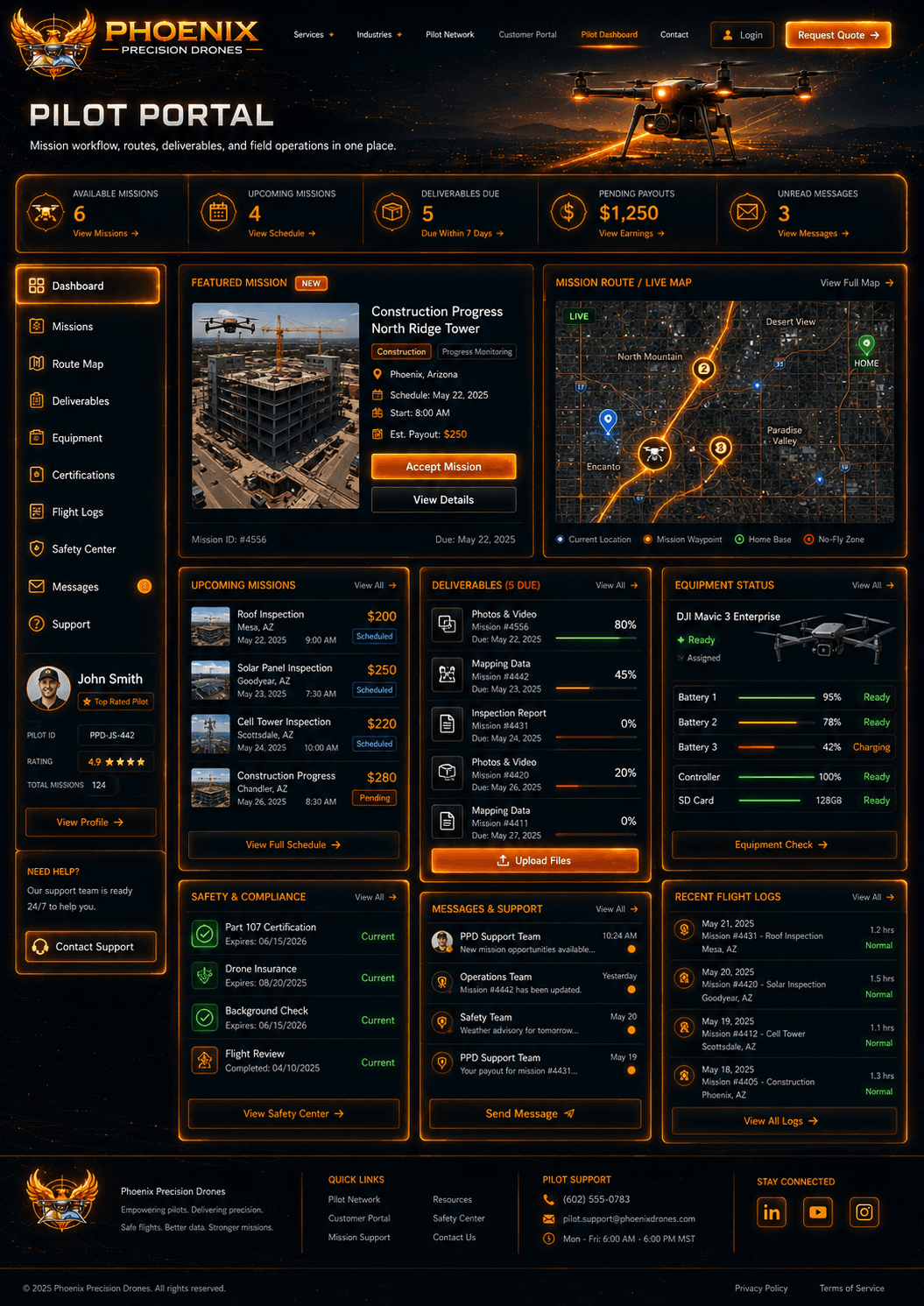
The platform is designed to evaluate real job factors before routing work: location, distance, ETA, skill requirements, drone capability, pilot status, safety, workload, and response history.
The system can rank eligible pilots by distance, availability, skill, drone capability, safety score, response history, acceptance history, and mission fit.
Network jobs can be offered to a small group of qualified pilots for a limited window, then move to the next group if needed.
Pilots receive mission information, route context, safety requirements, customer deliverable expectations, and upload workflow support.
Flight media, mapping outputs, inspection evidence, and reports can stay connected to the job, deliverable, payout, and customer record.
PPD is designed with pilot readiness and safety controls around the dispatch process. Pilots should not be matched to work they are not qualified, equipped, available, or rested enough to perform.
Part 107 and other pilot certifications are part of the qualification workflow.
Pilot insurance status and expiration dates are tracked as part of network readiness.
Daily flight time, weekly flight time, and rest windows are designed into pilot safety logic.
Wind, gusts, heat, precipitation, and operating limits are considered before mission execution.
LiDAR, thermal, photography, DJI support, and verified aircraft capabilities can be matched to job requirements.
Safety scores, incidents, and risk records can be used to support better operational decisions.
PPD is designed to support intake, customer communication, job routing, scheduling, documentation, and follow-up.
Mission location, service type, route context, deliverables, and upload needs stay organized around each job.
Fatigue, daily workload, weekly flight time, and rest-window logic are designed into the platform model.
The goal is to expand nationally without losing qualification, safety, and mission-control discipline.